
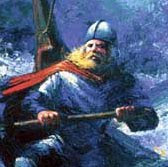
German Archeologists Uncover Keltic Treasure
Rare Discovery of Intact Tomb
Spiegel Online Wednesday, 29 December 2010
STUTTGART — Archeologists in Germany have discovered a
2,600-year-old Keltic tomb containing ornate jewelry of gold
and amber. They say the grave is unusually well preserved
and should provide important insights into early Keltic culture.
German archeologists have unearthed a 2,600-year-old Keltic
tomb containing a treasure of jewelry made of gold, amber
and bronze.
The subterranean chamber measuring four by five meters was
uncovered near the prehistoric Heuneburg hill fort near the town
of Herbertingen in southwestern Germany. Its contents, including
the oak floor of the room, are unusually well preserved.
The find is a "milestone for the reconstruction of the social history
of the Kelts," archeologist Dirk Krausse, the director of the dig,
said on Tuesday.
The intact oak should allow archeologists to ascertain the precise
age of the tomb through tree-ring dating. This is rarely possible
with Keltic finds because the Kelts left behind no writings and
their buildings, usually made from wood and clay, have long since
crumbled away.
A Vital Trading Center
Krausse said the artifacts found suggest that a woman from the
Heuneburg aristocracy was buried there, but added that laboratory
tests will need to be conducted to be certain. Only a small part
of the chamber has so far been examined.
The entire room, weighing some 80 tons, was lifted by two cranes
onto a flatbed truck and taken to a research facility in Ludwigsburg
on Tuesday. The results of the analysis will be presented in June
2011, researchers said.
Heuneburg is regarded as one of the most important Keltic
settlements and was a vital trading center during the period between
620 and 480 BC. Intensive excavation has taken place at the site
since 1950. Other tombs found at Heuneburg over the decades had
already been plundered.
The tomb and the objects are to go on show in an exhibition in
Stuttgart in 2012.
http://www.spiegel.de/international/germany/0,1518,736942,00.html
RELATED STORY:
Mapping Ancient Germania:
Berlin Researchers Crack the Ptolemy Code
http://www.spiegel.de/international/zeitgeist/0,1518,720513,00.html
Wednesday, 5 January 2011


Gilad Atzmon: Milton Friedman’s ‘Capitalism and the Jews’ Revisited
Monday, January 3, 2011
Given the severity and uncertainty of the economic crisis we are all experiencing, I suggest we look once more at the work of Milton Friedman, the leading economist and a staunch advocate of hard capitalism.
During the 1960s -80s Friedman was regarded by many academics, politicians and world leaders as the most important post- World War Two economist. Friedman was chief economic advisor to Ronald Reagan, Margaret Thatcher and Menachem Begin. He also went on record advising the Chilean military dictator Augusto Pinochet.
It is far from surprising to note that more and more commentators have realised in recent years that it was Friedman’s ideology and advocacy of free enterprise, zero governmental intervention and privatisation that has led to the current financial turmoil. It was Milton Friedman’s philosophy that also contributed to the transformation of the West into a service economy.
But Friedman wasn’t just an economist: he was also a devout Zionist and a very proud Jew. Friedman was interested in the role of the Jews in world finance and politics. He also attempted to analyse and understand the attitude of Jews towards wealth. In 1972 Friedman spoke to The Mont Pelerin Society about “Capitalism and the Jews”. In 1978 he repeated the same talk, addressing Jewish students at the Chicago University’s Hillel institute.
I'd suggest that Friedman deserves our immediate attention, since he contributed to the rise of an ideology and school of thought that bears some responsibility for the rearrangement (some might say dismantling ) of the West's economy.
Click to read more ...
Given the severity and uncertainty of the economic crisis we are all experiencing, I suggest we look once more at the work of Milton Friedman, the leading economist and a staunch advocate of hard capitalism.
During the 1960s -80s Friedman was regarded by many academics, politicians and world leaders as the most important post- World War Two economist. Friedman was chief economic advisor to Ronald Reagan, Margaret Thatcher and Menachem Begin. He also went on record advising the Chilean military dictator Augusto Pinochet.
It is far from surprising to note that more and more commentators have realised in recent years that it was Friedman’s ideology and advocacy of free enterprise, zero governmental intervention and privatisation that has led to the current financial turmoil. It was Milton Friedman’s philosophy that also contributed to the transformation of the West into a service economy.
But Friedman wasn’t just an economist: he was also a devout Zionist and a very proud Jew. Friedman was interested in the role of the Jews in world finance and politics. He also attempted to analyse and understand the attitude of Jews towards wealth. In 1972 Friedman spoke to The Mont Pelerin Society about “Capitalism and the Jews”. In 1978 he repeated the same talk, addressing Jewish students at the Chicago University’s Hillel institute.
I'd suggest that Friedman deserves our immediate attention, since he contributed to the rise of an ideology and school of thought that bears some responsibility for the rearrangement (some might say dismantling ) of the West's economy.
Click to read more ...
Gilad Atzmon: Milton Friedman’s ‘Capitalism and the Jews’ Revisited
Monday, January 3, 2011
Given the severity and uncertainty of the economic crisis we are all experiencing, I suggest we look once more at the work of Milton Friedman, the leading economist and a staunch advocate of hard capitalism.
During the 1960s -80s Friedman was regarded by many academics, politicians and world leaders as the most important post- World War Two economist. Friedman was chief economic advisor to Ronald Reagan, Margaret Thatcher and Menachem Begin. He also went on record advising the Chilean military dictator Augusto Pinochet.
It is far from surprising to note that more and more commentators have realised in recent years that it was Friedman’s ideology and advocacy of free enterprise, zero governmental intervention and privatisation that has led to the current financial turmoil. It was Milton Friedman’s philosophy that also contributed to the transformation of the West into a service economy.
But Friedman wasn’t just an economist: he was also a devout Zionist and a very proud Jew. Friedman was interested in the role of the Jews in world finance and politics. He also attempted to analyse and understand the attitude of Jews towards wealth. In 1972 Friedman spoke to The Mont Pelerin Society about “Capitalism and the Jews”. In 1978 he repeated the same talk, addressing Jewish students at the Chicago University’s Hillel institute.
I'd suggest that Friedman deserves our immediate attention, since he contributed to the rise of an ideology and school of thought that bears some responsibility for the rearrangement (some might say dismantling ) of the West's economy.
Click to read more ...
Given the severity and uncertainty of the economic crisis we are all experiencing, I suggest we look once more at the work of Milton Friedman, the leading economist and a staunch advocate of hard capitalism.
During the 1960s -80s Friedman was regarded by many academics, politicians and world leaders as the most important post- World War Two economist. Friedman was chief economic advisor to Ronald Reagan, Margaret Thatcher and Menachem Begin. He also went on record advising the Chilean military dictator Augusto Pinochet.
It is far from surprising to note that more and more commentators have realised in recent years that it was Friedman’s ideology and advocacy of free enterprise, zero governmental intervention and privatisation that has led to the current financial turmoil. It was Milton Friedman’s philosophy that also contributed to the transformation of the West into a service economy.
But Friedman wasn’t just an economist: he was also a devout Zionist and a very proud Jew. Friedman was interested in the role of the Jews in world finance and politics. He also attempted to analyse and understand the attitude of Jews towards wealth. In 1972 Friedman spoke to The Mont Pelerin Society about “Capitalism and the Jews”. In 1978 he repeated the same talk, addressing Jewish students at the Chicago University’s Hillel institute.
I'd suggest that Friedman deserves our immediate attention, since he contributed to the rise of an ideology and school of thought that bears some responsibility for the rearrangement (some might say dismantling ) of the West's economy.
Click to read more ...
Sunday, 2 January 2011
Jews Reveal Their Plans For The World
Jews Reveal Their Plans For The World
http://www.youtube.com/watch?v=dBISPUMxblo
--
"It is not because things are difficult that we do not dare;
it is because we do not dare that they are difficult."
~Seneca
`
http://www.youtube.com/watch?v=dBISPUMxblo
--
"It is not because things are difficult that we do not dare;
it is because we do not dare that they are difficult."
~Seneca
`
Sunday, 26 December 2010
Kevin Käther’s Questions That Caused Berlin
Kevin Käther’s Questions That Caused Berlin
District Court to Drop His Case
Written by Kevin Käther
Translated by J M Damon
The original German is posted at
{Germanophiles everywhere are following the self-accusation trials of young dissidents such as Kevin Käther and Dirk Zimmermann with great interest, and we are encouraged by the growth of dissident sentiment in the judiciary of the “Federal Republic.”
As dissident attorney Sylvia Stolz remarked at her own sentencing: “NICHT ALLE RICHTER SIND SCHURKEN!” (Not all judges are scoundrels).}
Kevin Käther’s most recent self-accusation trial began before Berlin District Court on 25 October 2010.
The background to his trials is posted on website along with his original trial reports.
Kevin had originally mailed CDs of Germar Rudolf’s Lectures on the Holocaust to the Berlin Attorney General, Lea Rosh, Professor Wolfgang Benz and Professor Ernst Nolte.
Under the provisions of Section 130 of the German Penal Code he then filed charges against himself, accusing himself of VOLKSVERHETZUNG (Incitement of the Masses) in order to compel a WAHRHEITSERHEBUNG (judicial truth ascertainment) of the official “Holocaust” narrative.
For this crime he was initially sentenced to eight months imprisonment without parole.
However, the Berlin Superior Court set aside this sentence, ruling that mailing CDs did not comprise incitement of the masses and was not a punishable offense.
His case was scheduled for retrial on 25 October 2010.
This time, the persons to whom the CDs had been addressed were called as witnesses.
Kevin, who has doubts about the veracity of the official “Holocaust” narrative, welcomed an opportunity to be educated by the facts and the arguments of such an officially acknowledged “Holocaust” expert as Prof. Wolfgang Benz, who was summoned as a witness.
He welcomed the opportunity to be convinced that six million Jews had really been gassed under Hitler and that he, Kevin Käther, was in fact suffering under misapprehensions.
And he hoped for enlightenment from Professor Ernst Nolte as well.
The Court should have shown a lively interest in allowing the accused to be enlightened by these famous professors.
The defendant, a so-called “Holocaust Denier” was standing before the Court eager to be instructed.
He was prepared to abandon his heresies if presented with sufficient evidence of the veracity of “Holocaust.”
Alas – his redemption was not to be!
Performing an abrupt about-face, the Court would not allow questioning of these knowledgeable witnesses by a defendant who was thirsting for knowledge and enlightenment.
After just two questions directed at Prof. Ernst Nolte, the Court terminated Kevin’s questioning of witnesses.
On 1 November 2010, before Kevin could ask Prof. Wolfgang Benz a single question, the Court discontinued his trial.
In preparation for his trial Kevin had submitted the following questions for the witnesses in the form of an evidentiary motion which the Court apparently considered dangerous.
By discontinuing the trial, the Court was able to delete Kevin’s questions.
They were not entered into the trial record as an evidentiary motion.
Thus the Inquisitorial Court of the so-called Federal Republic of Germany preferred to discontinue a “Holocaust” trial rather than expose its experts to the questions of a heretical Revisionist intent on enlightening himself!
Can anyone with any vestiges of a conscience believe anything this government says?
”Holocaust” experts such as Professor Benz, on whom the System so confidently relies as long as Revisionists are not allowed to put them through the wringer, have to be protected from the questions of an eager-to-learn defendant.
Such is the unmistakable reality in our Federal Republic of Germany.
Questions For Witnesses Ernst Nolte and Wolfgang Benz
from Käther’s Evidentiary Motion
From the above mentioned contents we must determine whether the present book sent through the mails, Germar Rudolf’s LECTURES ON THE HOLOCAUST, meets the criteria for “Denying ‘Holocaust’” or whether we are dealing with a scientific work that is based on empirical facts, and whose sending through the mails therefore cannot be proscribed.
In addition, questioning of the witnesses will reveal uncertainty regarding the ruling by the BUNDESGERICHTSHOF (Federal Supreme Court) on OFFENKUNDIGKEIT (“Manifest Obviousness”) and necessitate additional evidentiary motions regarding the “Holocaust” complex.
In order to ascertain and debate these circumstances, all the witnesses must be asked the following questions:
1. Have you read the book that I sent to you, LECTURES ON THE HOLOCAUST, by the diploma chemist Germar Rudolf?
2. Did you read this book?
-Yes or no?
3. Did you disseminate this book?
-Yes or no?
4. Did you make this book available to a third person?
-Yes or no?
5. Did you find any errors or mistakes in the book LECTURES ON THE -HOLOCAUST?
-Yes or no?
********
6. (Question for Witness Nolte).
Is the following quotation taken from your book “STREITPUNKTE” applicable?
[FOOTNOTE 1: ERNST Nolte, Streitpunkte, Ullstein, Frankfurt am Main – Berlin, 1993, p. 308]
“The widely held opinion that all doubt about the prevailing conceptions of ‘Holocaust’ with its six million Jewish victims is evidence of an inherently evil attitude and contempt for all mankind, and that it must be suppressed whenever possible, is completely unacceptable to science.
This is because of the fundamental and overriding significance of the maxim ‘DE OMNIBUS DUBITANDUM EST’ (Everything must be questioned) for the verification of truth.
We must reject the proscription of doubts about ‘Holocaust’ because such proscription is an attack on the very principle of freedom of scientific investigation.”
7. (Question for Witness Nolte.)
Do you perceive an assault on freedom of scientific investigation in the conviction of Germar Rudolf by Mannheim District Court?
8. (Question for Witness Nolte.)
Is the following quotation, which is taken from your book STREITPUNKTE, relevant to the issue of freedom of scientific investigation?
[FOOTNOTE 2: Nolte, ibid., p. 9]
“Although I felt more challenged by ‘Revisionism’ than did other contemporary German historians, I was soon convinced that this school was being treated unscientifically in mainstream literature.
It was treated solely with rejection, with suspicion of the motives of the authors, and by completely ignoring them.”
9. (Question for Witness Nolte).
In addition, you write the following in your work “STREITPUNKTE:”
“...Questions about the reliability of eyewitnesses, authenticity of documents, the scientific possibility or impossibility of certain processes and events, the credibility of statistics and the emphasis placed on certain circumstances are not only permissible, they are scientifically indispensable.
Every attempt to banish certain arguments and evidence by ignoring or proscribing them must be considered illegitimate.”
- Prof. Nolte, in regard to this quotation, may we conclude that considerations and investigations by Revisionists should be considered legitimate and desirable?
10. (Question for Witness Nolte).
In 1999, you published the work FEINDLICHE NÄHE in association with the leftist French philosopher Francois Furet.
Here is a quotation that you yourself wrote.
[FOOTNOTE 3: François Furet - Ernst Nolte. "Feindliche Nähe”. Kommunismus und Faschismus im 20. Jahrhundert. Ein Briefwechsel. München (Herbig), 1998, pp. 74-79]
“If radical Revisionism were correct in its contention that a ‘Holocaust,’ in the sense of extensive and systematic extermination measures originating in the highest levels of government never existed, I would have to make the following confession: National Socialism was not a ‘VERZERRTE KOPIE DES BOLSCHEWISMUS’ (deformed copy of Bolshevism).
Rather, National Socialism was occupied exclusively with the survival struggle of a Germany that had been internationally forced onto the defensive.
No author willingly admits that his work is lying in ruins, and so I have a vital interest in demonstrating that Revisionism is incorrect -at least in its radical version.”
Prof. Nolte, more than 12 years have now passed since the publication of FEINDLICHE NÄHE.
In the course of ongoing Revisionist findings, have you already had to admit or concede incorrectness in any of your earlier historical publications?
If so, which ones?
11. (Question for Witness Nolte).
In your work DER KAUSALE NEXUS., you cover the “confession” of Rudolf Höß, Commandant of Auschwitz Camp, as well as the Gerstein documents and eyewitness testimony, and you write the following.
(FOOTNOTE 4: Ernst Nolte, DER KAUSALE NEXUS. ÜBER REVISIONEN UND REVISIONISTEN IN DER GESCHICHTSWISSENSCHAFT, Herbig. München, 2002, pp. 96-.)
“The confessions of the commandant of Auschwitz, Rudolf Höß, which undeniably contributed greatly to the collapse of the defense of alleged war criminals in the Nuremberg trials, were obtained by the use of torture.
Under the rules of Western jurisprudence, they would have been inadmissible in a court of law.
The so-called Gerstein Documents are so filled with contradictions, and include so many scientific impossibilities, that they must be dismissed as worthless.
The greater part by far of witness testimony rests on hearsay and unsubstantiated assumptions.
The reports of the few eyewitnesses contradict one another, which creates doubt concerning their credibility...
In contrast to the investigations of the Katyn massacre following the Wehrmacht’s discovery of mass graves in 1943, no international commissions of experts were allowed to scientifically investigate the allegations of homicidal gassings in German concentrations following World War II.
The responsibility for this lack of investigation rests with the Soviet and Polish Communists...
The widespread publications of photographs of crematoria as well as canisters with the label ‘Cyclon B Poison Gas’ have no evidentiary significance, since crematoria were necessitated by the recurrent epidemics and Cyclon B was the standard pesticide used to control typhus-bearing lice everywhere that large numbers of people lived under poor sanitary conditions...
For these reasons, it is vitally necessary to question postwar rulings that mass exterminations in homicidal gas chambers were “proven” by countless statements and unsubstantiated “facts” of which there are no doubts whatsoever.
Such questioning must be allowed, or else scientific truth in this area of history is ruled out – it is simply not a possibility.”
Professor Nolte, did I state the passage correctly?
If so, what information and insight can we now consider obvious and allowable in court?
12. (Question for Witness Nolte).
In your book DER KAUSALE NEXUS (FOOTNOTE 5: E. Nolte, ibid., p. 122) you write the following:
“At issue is the allegation that, on the basis of scientific evidence and matters of fact, there either were no mass killings by gassings or else they did not occur to the extent alleged.
Here I am referring to chemical investigations, including an expert report [the Rudolf Report] comparing residues of cyanide in delousing chambers at Auschwitz with residues in areas designated in construction plans as crematoria morgues.
[The Rudolf Expert Report was commissioned by a German court during the trial of Gen. Remer in 1992 and carried out by Diploma Chemist Germar Rudolf of Max Planck Institute, who was subsequently sentenced to thirty months imprisonment.]
These investigations were carried out by Leuchter, Rudolf and Lüftl. They also include extremely detailed studies by Carlo Mattogno that include burn-hours, coke consumption and similar matters.
It is impossible to objectively argue against the recurrent thesis that what is scientifically or technically impossible could not have taken place, notwithstanding hundreds of confessions and eyewitness accounts asserted the contrary.
Such a thesis cannot be scientifically argued, on principle.
Objectively and scientifically speaking, the admission is unavoidable that humanities scholars and ideologists should have no voice in such an argument [that pertains to the realm of the natural sciences].”
Prof. Nolte, please explain to us whether Rudolf erred and, in case his work contains mistakes, tell us what they are.
In 1993, 300 professors of anorganic chemistry were unable to find a single mistake in Rudolf’s Expert Report, and Swiss expert witness Prof. Henri Ramuz attested to its correctness before Court Chatel-St. Denis on 18 May 1997.
13. (Question for Witness Nolte).
Shortly before his death in June 2006, the “Holocaust” specialist Raul Hilberg, who is frequently quoted by official historians, felt obliged to admit that a great deal of research is still required in “Holocaust” historiography.
Hilberg [author of the extensive three-volume DESTRUCTION OF EUROPEAN JEWRY] admitted, “We understand perhaps twenty percent of the Holocaust (DER STANDARD, Vienna, 10 June 2006, p. 42).
Jürgen Heynsel of the Warsaw Jewish Historical Institute endorsed this assessment: “The decisive stage of writing the history of the Holocaust is still before us.” (“Kein Schindler” in NEUES DEUTSCHLAND, 13 October 2009.)
Prof. Nolte - in view of Hilberg’s and Heynsel’s elucidations, do you consider the “Holocaust” to be a “manifestly obvious” fact that has no need of supporting evidence and further research?
14. (It is not stated for whom this question was intended; apparently it was intended for Prof. Wolfgang Benz.)
The Federal Republic of Germany has decreed that HOLOCAUST-OFFENKUNDIGKEIT (the Manifest Obviousness of “Holocaust”) is unquestionable and the BUNDESGERICHTSHOF (Federal Supreme Court) has decreed that it is unchallengeable.
Since the Deckert trial, “...genocide committed against the Jews, primarily in gas chambers of concentration camps is a manifestly obvious historical fact.”
(Court Verdict 1 StR 179/94)
Why then was Daniel Goldhagen’s book HITLER’S WILLING EXECUTIONERS not placed on the index of proscribed books and why was he not charged with a crime, since he writes in his book that gassing was a “minor event” in the murder of Jews?
15. (Question apparently intended for Witness Benz)
Are you aware that both Rita Süßmuth (former president of the BUNDESTAG) and Fritjof Meyer (former editor of SPIEGEL magazine) reduced the number of Jewish victims gassed at Auschwitz to 356,000 and relocated the “murder weapons” or places of mass murder (the alleged “gas chambers” of official historiography) to two farm houses that stood outside Auschwitz Camp and no longer exist?
16. (Question apparently intended for Witness Benz)
The office of the District Attorney of Stuttgart accepted these revisions as authentic and declined to prosecute author Fritjof Meyer, chief editor of SPIEGEL magazine, and former President of the BUNDESTAG Rita Süßmuth, publisher of the article "DIE ZAHL DER OPFER VON AUSCHWITZ - NEUE ERKENNTNISSE DURCH NEUE ARCHIVFUNDE" (in the periodical OSTEUROPA, 5, 2002, pp. 631-.)
The District Attorney declined to prosecute Meyer and Süßmuth for violating Section 130 of the Penal Code - the corresponding Order to Stop Proceedings) was released on 28 May 2003 in Document 4 Js 75185/02.
In your opinion, is the principle of Manifest Obviousness still operative?
17. (Question apparently intended for Witness Benz)
How can the obvious fact be explained that obviously the official number of “Holocaust” victims is continuing to melt like snow in the sun of springtime?
Can acceptance of the evidence submitted by Fritjof Meyer be ascribed to the fact that the last camp commander of Auschwitz, Rudolf Höß, signed this confession with its fantastical numbers under torture - in the hope and expectation that the exaggerations would be recognized and attention directed to the circumstances under which the incriminating testimony was obtained?
18. (Question apparently intended for Witness Benz)
The world-renowned Jewish “Holocaust” researcher and author Gitta Sereny stated in the London Times on 29 August 2001:
“Why in the world have these people made Auschwitz into a holy cow?
Auschwitz was a terrible place, but it was not an extermination camp!”
As a distinguished historian, can you explain why I, an independent researcher, should not believe the distinguished “Holocaust” historian Gitta Sereny, especially considering that according to official historiography, Auschwitz was supposed to be the center of “Jewish Extermination?”
19. (Question apparently intended for Witness Benz)
In conjunction with the article by Fritjof Meyer and Rita Süßmuth as well as the statements of Hilberg, Sereney and Heynsel, do you consider an examination and revision of the official account of Auschwitz necessary?
20. (Question apparently intended for Witness Benz)
What is your opinion of the findings of official historiography that after 1960, Dachau could no longer be considered the center of alleged National Socialist “exterminations”?
Also, what brought about the sudden recent findings that no homicidal gassings took place there at all?
21. (Question apparently intended for Witness Benz)
On which facts and documents are the new findings based, that no one was gassed at Dachau, even though the Allied “factfinders” at Nuremberg alleged the exact opposite?
22. (Question apparently intended for Witness Benz)
Why is it not explained in detail which “facts” were originally used to allege mass exterminations at Dachau, and what evidence was later used to prove that the opposite was true?
23. (Question apparently intended for Witness Benz)
As an acknowledged expert, you can surely inform me as to which of the two following National Socialist verdicts in our so-called “nation of laws” is true and which false, as well as why it is true or false:
a) “Concentration Camp Maidanek contained no gas chamber” (Verdict of Berlin District Court (8.5.1950, PKs 3/50) and
b) “Mass gassings took place in Maidanek.”
(Verdict of Düsseldorf District Court, 30.6.1981, XVII-1/75 S).
In order to come right to the point, let me point out that both verdicts refer to the same period of time.
I sincerely request elucidation in this matter.
24. (Question apparently intended for Witness Benz)
In addition, you can surely also instruct me in my quest for real truth as to which truth is correct: the truth proclaimed in the Nuremberg Tribunal or the truth proclaimed in Düsseldorf District Court.
Nuremberg Tribunal Document 3311-PS “proved” that hundreds of thousands of Jews were killed with steam at Treblinka, but decades later Düsseldorf District Court (K I Is 2/64) proclaimed that these victims were not steamed but rather gassed.
I sincerely request elucidation in this matter.
25. (Question apparently intended for Witness Benz)
Why does the so-called “Federal Republic” enact legal ordinances to protect narratives and allegations that even the government itself cannot coherently explain?
For lack of space, I have listed only a few isolated examples of these contradictions.
Why does the “Federal Republic” not allow free and independent historical research into the historical subject of “Holocaust?”
Why are historians who arrive at differing conclusions regarding “Holocaust” slandered, demonized and incarcerated, even though their findings have never been disproven in court?
Kevin Käther
****************
The translator is a Germanophile who makes German articles about Germany’s historical plight accessible to those who do not read German.
Here's freedom to him who would speak,
Here's freedom to him who would write;
For there's none ever feared that the truth should be heard,
Save him whom the truth would indict!
ROBERT BURNS (1759–96)
District Court to Drop His Case
Written by Kevin Käther
Translated by J M Damon
The original German is posted at
{Germanophiles everywhere are following the self-accusation trials of young dissidents such as Kevin Käther and Dirk Zimmermann with great interest, and we are encouraged by the growth of dissident sentiment in the judiciary of the “Federal Republic.”
As dissident attorney Sylvia Stolz remarked at her own sentencing: “NICHT ALLE RICHTER SIND SCHURKEN!” (Not all judges are scoundrels).}
Kevin Käther’s most recent self-accusation trial began before Berlin District Court on 25 October 2010.
The background to his trials is posted on
Kevin had originally mailed CDs of Germar Rudolf’s Lectures on the Holocaust to the Berlin Attorney General, Lea Rosh, Professor Wolfgang Benz and Professor Ernst Nolte.
Under the provisions of Section 130 of the German Penal Code he then filed charges against himself, accusing himself of VOLKSVERHETZUNG (Incitement of the Masses) in order to compel a WAHRHEITSERHEBUNG (judicial truth ascertainment) of the official “Holocaust” narrative.
For this crime he was initially sentenced to eight months imprisonment without parole.
However, the Berlin Superior Court set aside this sentence, ruling that mailing CDs did not comprise incitement of the masses and was not a punishable offense.
His case was scheduled for retrial on 25 October 2010.
This time, the persons to whom the CDs had been addressed were called as witnesses.
Kevin, who has doubts about the veracity of the official “Holocaust” narrative, welcomed an opportunity to be educated by the facts and the arguments of such an officially acknowledged “Holocaust” expert as Prof. Wolfgang Benz, who was summoned as a witness.
He welcomed the opportunity to be convinced that six million Jews had really been gassed under Hitler and that he, Kevin Käther, was in fact suffering under misapprehensions.
And he hoped for enlightenment from Professor Ernst Nolte as well.
The Court should have shown a lively interest in allowing the accused to be enlightened by these famous professors.
The defendant, a so-called “Holocaust Denier” was standing before the Court eager to be instructed.
He was prepared to abandon his heresies if presented with sufficient evidence of the veracity of “Holocaust.”
Alas – his redemption was not to be!
Performing an abrupt about-face, the Court would not allow questioning of these knowledgeable witnesses by a defendant who was thirsting for knowledge and enlightenment.
After just two questions directed at Prof. Ernst Nolte, the Court terminated Kevin’s questioning of witnesses.
On 1 November 2010, before Kevin could ask Prof. Wolfgang Benz a single question, the Court discontinued his trial.
In preparation for his trial Kevin had submitted the following questions for the witnesses in the form of an evidentiary motion which the Court apparently considered dangerous.
By discontinuing the trial, the Court was able to delete Kevin’s questions.
They were not entered into the trial record as an evidentiary motion.
Thus the Inquisitorial Court of the so-called Federal Republic of Germany preferred to discontinue a “Holocaust” trial rather than expose its experts to the questions of a heretical Revisionist intent on enlightening himself!
Can anyone with any vestiges of a conscience believe anything this government says?
”Holocaust” experts such as Professor Benz, on whom the System so confidently relies as long as Revisionists are not allowed to put them through the wringer, have to be protected from the questions of an eager-to-learn defendant.
Such is the unmistakable reality in our Federal Republic of Germany.
Questions For Witnesses Ernst Nolte and Wolfgang Benz
from Käther’s Evidentiary Motion
From the above mentioned contents we must determine whether the present book sent through the mails, Germar Rudolf’s LECTURES ON THE HOLOCAUST, meets the criteria for “Denying ‘Holocaust’” or whether we are dealing with a scientific work that is based on empirical facts, and whose sending through the mails therefore cannot be proscribed.
In addition, questioning of the witnesses will reveal uncertainty regarding the ruling by the BUNDESGERICHTSHOF (Federal Supreme Court) on OFFENKUNDIGKEIT (“Manifest Obviousness”) and necessitate additional evidentiary motions regarding the “Holocaust” complex.
In order to ascertain and debate these circumstances, all the witnesses must be asked the following questions:
1. Have you read the book that I sent to you, LECTURES ON THE HOLOCAUST, by the diploma chemist Germar Rudolf?
2. Did you read this book?
-Yes or no?
3. Did you disseminate this book?
-Yes or no?
4. Did you make this book available to a third person?
-Yes or no?
5. Did you find any errors or mistakes in the book LECTURES ON THE -HOLOCAUST?
-Yes or no?
********
6. (Question for Witness Nolte).
Is the following quotation taken from your book “STREITPUNKTE” applicable?
[FOOTNOTE 1: ERNST Nolte, Streitpunkte, Ullstein, Frankfurt am Main – Berlin, 1993, p. 308]
“The widely held opinion that all doubt about the prevailing conceptions of ‘Holocaust’ with its six million Jewish victims is evidence of an inherently evil attitude and contempt for all mankind, and that it must be suppressed whenever possible, is completely unacceptable to science.
This is because of the fundamental and overriding significance of the maxim ‘DE OMNIBUS DUBITANDUM EST’ (Everything must be questioned) for the verification of truth.
We must reject the proscription of doubts about ‘Holocaust’ because such proscription is an attack on the very principle of freedom of scientific investigation.”
7. (Question for Witness Nolte.)
Do you perceive an assault on freedom of scientific investigation in the conviction of Germar Rudolf by Mannheim District Court?
8. (Question for Witness Nolte.)
Is the following quotation, which is taken from your book STREITPUNKTE, relevant to the issue of freedom of scientific investigation?
[FOOTNOTE 2: Nolte, ibid., p. 9]
“Although I felt more challenged by ‘Revisionism’ than did other contemporary German historians, I was soon convinced that this school was being treated unscientifically in mainstream literature.
It was treated solely with rejection, with suspicion of the motives of the authors, and by completely ignoring them.”
9. (Question for Witness Nolte).
In addition, you write the following in your work “STREITPUNKTE:”
“...Questions about the reliability of eyewitnesses, authenticity of documents, the scientific possibility or impossibility of certain processes and events, the credibility of statistics and the emphasis placed on certain circumstances are not only permissible, they are scientifically indispensable.
Every attempt to banish certain arguments and evidence by ignoring or proscribing them must be considered illegitimate.”
- Prof. Nolte, in regard to this quotation, may we conclude that considerations and investigations by Revisionists should be considered legitimate and desirable?
10. (Question for Witness Nolte).
In 1999, you published the work FEINDLICHE NÄHE in association with the leftist French philosopher Francois Furet.
Here is a quotation that you yourself wrote.
[FOOTNOTE 3: François Furet - Ernst Nolte. "Feindliche Nähe”. Kommunismus und Faschismus im 20. Jahrhundert. Ein Briefwechsel. München (Herbig), 1998, pp. 74-79]
“If radical Revisionism were correct in its contention that a ‘Holocaust,’ in the sense of extensive and systematic extermination measures originating in the highest levels of government never existed, I would have to make the following confession: National Socialism was not a ‘VERZERRTE KOPIE DES BOLSCHEWISMUS’ (deformed copy of Bolshevism).
Rather, National Socialism was occupied exclusively with the survival struggle of a Germany that had been internationally forced onto the defensive.
No author willingly admits that his work is lying in ruins, and so I have a vital interest in demonstrating that Revisionism is incorrect -at least in its radical version.”
Prof. Nolte, more than 12 years have now passed since the publication of FEINDLICHE NÄHE.
In the course of ongoing Revisionist findings, have you already had to admit or concede incorrectness in any of your earlier historical publications?
If so, which ones?
11. (Question for Witness Nolte).
In your work DER KAUSALE NEXUS., you cover the “confession” of Rudolf Höß, Commandant of Auschwitz Camp, as well as the Gerstein documents and eyewitness testimony, and you write the following.
(FOOTNOTE 4: Ernst Nolte, DER KAUSALE NEXUS. ÜBER REVISIONEN UND REVISIONISTEN IN DER GESCHICHTSWISSENSCHAFT, Herbig. München, 2002, pp. 96-.)
“The confessions of the commandant of Auschwitz, Rudolf Höß, which undeniably contributed greatly to the collapse of the defense of alleged war criminals in the Nuremberg trials, were obtained by the use of torture.
Under the rules of Western jurisprudence, they would have been inadmissible in a court of law.
The so-called Gerstein Documents are so filled with contradictions, and include so many scientific impossibilities, that they must be dismissed as worthless.
The greater part by far of witness testimony rests on hearsay and unsubstantiated assumptions.
The reports of the few eyewitnesses contradict one another, which creates doubt concerning their credibility...
In contrast to the investigations of the Katyn massacre following the Wehrmacht’s discovery of mass graves in 1943, no international commissions of experts were allowed to scientifically investigate the allegations of homicidal gassings in German concentrations following World War II.
The responsibility for this lack of investigation rests with the Soviet and Polish Communists...
The widespread publications of photographs of crematoria as well as canisters with the label ‘Cyclon B Poison Gas’ have no evidentiary significance, since crematoria were necessitated by the recurrent epidemics and Cyclon B was the standard pesticide used to control typhus-bearing lice everywhere that large numbers of people lived under poor sanitary conditions...
For these reasons, it is vitally necessary to question postwar rulings that mass exterminations in homicidal gas chambers were “proven” by countless statements and unsubstantiated “facts” of which there are no doubts whatsoever.
Such questioning must be allowed, or else scientific truth in this area of history is ruled out – it is simply not a possibility.”
Professor Nolte, did I state the passage correctly?
If so, what information and insight can we now consider obvious and allowable in court?
12. (Question for Witness Nolte).
In your book DER KAUSALE NEXUS (FOOTNOTE 5: E. Nolte, ibid., p. 122) you write the following:
“At issue is the allegation that, on the basis of scientific evidence and matters of fact, there either were no mass killings by gassings or else they did not occur to the extent alleged.
Here I am referring to chemical investigations, including an expert report [the Rudolf Report] comparing residues of cyanide in delousing chambers at Auschwitz with residues in areas designated in construction plans as crematoria morgues.
[The Rudolf Expert Report was commissioned by a German court during the trial of Gen. Remer in 1992 and carried out by Diploma Chemist Germar Rudolf of Max Planck Institute, who was subsequently sentenced to thirty months imprisonment.]
These investigations were carried out by Leuchter, Rudolf and Lüftl. They also include extremely detailed studies by Carlo Mattogno that include burn-hours, coke consumption and similar matters.
It is impossible to objectively argue against the recurrent thesis that what is scientifically or technically impossible could not have taken place, notwithstanding hundreds of confessions and eyewitness accounts asserted the contrary.
Such a thesis cannot be scientifically argued, on principle.
Objectively and scientifically speaking, the admission is unavoidable that humanities scholars and ideologists should have no voice in such an argument [that pertains to the realm of the natural sciences].”
Prof. Nolte, please explain to us whether Rudolf erred and, in case his work contains mistakes, tell us what they are.
In 1993, 300 professors of anorganic chemistry were unable to find a single mistake in Rudolf’s Expert Report, and Swiss expert witness Prof. Henri Ramuz attested to its correctness before Court Chatel-St. Denis on 18 May 1997.
13. (Question for Witness Nolte).
Shortly before his death in June 2006, the “Holocaust” specialist Raul Hilberg, who is frequently quoted by official historians, felt obliged to admit that a great deal of research is still required in “Holocaust” historiography.
Hilberg [author of the extensive three-volume DESTRUCTION OF EUROPEAN JEWRY] admitted, “We understand perhaps twenty percent of the Holocaust (DER STANDARD, Vienna, 10 June 2006, p. 42).
Jürgen Heynsel of the Warsaw Jewish Historical Institute endorsed this assessment: “The decisive stage of writing the history of the Holocaust is still before us.” (“Kein Schindler” in NEUES DEUTSCHLAND, 13 October 2009.)
Prof. Nolte - in view of Hilberg’s and Heynsel’s elucidations, do you consider the “Holocaust” to be a “manifestly obvious” fact that has no need of supporting evidence and further research?
14. (It is not stated for whom this question was intended; apparently it was intended for Prof. Wolfgang Benz.)
The Federal Republic of Germany has decreed that HOLOCAUST-OFFENKUNDIGKEIT (the Manifest Obviousness of “Holocaust”) is unquestionable and the BUNDESGERICHTSHOF (Federal Supreme Court) has decreed that it is unchallengeable.
Since the Deckert trial, “...genocide committed against the Jews, primarily in gas chambers of concentration camps is a manifestly obvious historical fact.”
(Court Verdict 1 StR 179/94)
Why then was Daniel Goldhagen’s book HITLER’S WILLING EXECUTIONERS not placed on the index of proscribed books and why was he not charged with a crime, since he writes in his book that gassing was a “minor event” in the murder of Jews?
15. (Question apparently intended for Witness Benz)
Are you aware that both Rita Süßmuth (former president of the BUNDESTAG) and Fritjof Meyer (former editor of SPIEGEL magazine) reduced the number of Jewish victims gassed at Auschwitz to 356,000 and relocated the “murder weapons” or places of mass murder (the alleged “gas chambers” of official historiography) to two farm houses that stood outside Auschwitz Camp and no longer exist?
16. (Question apparently intended for Witness Benz)
The office of the District Attorney of Stuttgart accepted these revisions as authentic and declined to prosecute author Fritjof Meyer, chief editor of SPIEGEL magazine, and former President of the BUNDESTAG Rita Süßmuth, publisher of the article "DIE ZAHL DER OPFER VON AUSCHWITZ - NEUE ERKENNTNISSE DURCH NEUE ARCHIVFUNDE" (in the periodical OSTEUROPA, 5, 2002, pp. 631-.)
The District Attorney declined to prosecute Meyer and Süßmuth for violating Section 130 of the Penal Code - the corresponding Order to Stop Proceedings) was released on 28 May 2003 in Document 4 Js 75185/02.
In your opinion, is the principle of Manifest Obviousness still operative?
17. (Question apparently intended for Witness Benz)
How can the obvious fact be explained that obviously the official number of “Holocaust” victims is continuing to melt like snow in the sun of springtime?
Can acceptance of the evidence submitted by Fritjof Meyer be ascribed to the fact that the last camp commander of Auschwitz, Rudolf Höß, signed this confession with its fantastical numbers under torture - in the hope and expectation that the exaggerations would be recognized and attention directed to the circumstances under which the incriminating testimony was obtained?
18. (Question apparently intended for Witness Benz)
The world-renowned Jewish “Holocaust” researcher and author Gitta Sereny stated in the London Times on 29 August 2001:
“Why in the world have these people made Auschwitz into a holy cow?
Auschwitz was a terrible place, but it was not an extermination camp!”
As a distinguished historian, can you explain why I, an independent researcher, should not believe the distinguished “Holocaust” historian Gitta Sereny, especially considering that according to official historiography, Auschwitz was supposed to be the center of “Jewish Extermination?”
19. (Question apparently intended for Witness Benz)
In conjunction with the article by Fritjof Meyer and Rita Süßmuth as well as the statements of Hilberg, Sereney and Heynsel, do you consider an examination and revision of the official account of Auschwitz necessary?
20. (Question apparently intended for Witness Benz)
What is your opinion of the findings of official historiography that after 1960, Dachau could no longer be considered the center of alleged National Socialist “exterminations”?
Also, what brought about the sudden recent findings that no homicidal gassings took place there at all?
21. (Question apparently intended for Witness Benz)
On which facts and documents are the new findings based, that no one was gassed at Dachau, even though the Allied “factfinders” at Nuremberg alleged the exact opposite?
22. (Question apparently intended for Witness Benz)
Why is it not explained in detail which “facts” were originally used to allege mass exterminations at Dachau, and what evidence was later used to prove that the opposite was true?
23. (Question apparently intended for Witness Benz)
As an acknowledged expert, you can surely inform me as to which of the two following National Socialist verdicts in our so-called “nation of laws” is true and which false, as well as why it is true or false:
a) “Concentration Camp Maidanek contained no gas chamber” (Verdict of Berlin District Court (8.5.1950, PKs 3/50) and
b) “Mass gassings took place in Maidanek.”
(Verdict of Düsseldorf District Court, 30.6.1981, XVII-1/75 S).
In order to come right to the point, let me point out that both verdicts refer to the same period of time.
I sincerely request elucidation in this matter.
24. (Question apparently intended for Witness Benz)
In addition, you can surely also instruct me in my quest for real truth as to which truth is correct: the truth proclaimed in the Nuremberg Tribunal or the truth proclaimed in Düsseldorf District Court.
Nuremberg Tribunal Document 3311-PS “proved” that hundreds of thousands of Jews were killed with steam at Treblinka, but decades later Düsseldorf District Court (K I Is 2/64) proclaimed that these victims were not steamed but rather gassed.
I sincerely request elucidation in this matter.
25. (Question apparently intended for Witness Benz)
Why does the so-called “Federal Republic” enact legal ordinances to protect narratives and allegations that even the government itself cannot coherently explain?
For lack of space, I have listed only a few isolated examples of these contradictions.
Why does the “Federal Republic” not allow free and independent historical research into the historical subject of “Holocaust?”
Why are historians who arrive at differing conclusions regarding “Holocaust” slandered, demonized and incarcerated, even though their findings have never been disproven in court?
Kevin Käther
****************
The translator is a Germanophile who makes German articles about Germany’s historical plight accessible to those who do not read German.
Here's freedom to him who would speak,
Here's freedom to him who would write;
For there's none ever feared that the truth should be heard,
Save him whom the truth would indict!
ROBERT BURNS (1759–96)
The Soldiers Truce:
The Soldiers Truce:
A Hidden History From The First World War
--------------------------------------------------------------------------------
--------------------------------------------------------------------------------
German and British soldiers fraternize – Christmas 1914
[Thanks to Dennis Serdel, Vietnam 1967-68 (one tour) Light Infantry, Americal Div. 11th Brigade, purple heart, Veterans For Peace 50 Michigan, Vietnam Veterans Against The War, United Auto Workers GM Retiree, in Perry, Michigan]
To many, the end of the war and the failure of the peace would validate the Christmas cease-fire as the only meaningful episode in the apocalypse.
It belied the bellicose slogans and suggested that the men fighting and often dying were, as usual, proxies for governments and issues that had little to do with their everyday lives. A candle lit in the darkness of Flanders, the truce flickered briefly and survives only in memoirs, letters, song, drama and story.
December 1, 2005 by John V. Denson, 2005 LewRockwell.com [Excerpts]
The Christmas Truce, which occurred primarily between the British and German soldiers along the Western Front in December 1914, is an event the official histories of the Great War leave out, and the Orwellian historians hide from the public.
Stanley Weintraub has broken through this barrier of silence and written a moving account of this significant event by compiling letters sent home from the front, as well as diaries of the soldiers involved. His book is entitled Silent Night: The Story of the World War I Christmas Truce. The book contains many pictures of the actual events showing the opposing forces mixing and celebrating together that first Christmas of the war.
This remarkable story begins to unfold, according to Weintraub, on the morning of December 19, 1914:
Lieutenant Geoffrey Heinekey, new to the 2ND Queen’s Westminster Rifles, wrote to his mother, ‘A most extraordinary thing happened. . . Some Germans came out and held up their hands and began to take in some of their wounded and so we ourselves immediately got out of our trenches and began bringing in our wounded also. The Germans then beckoned to us and a lot of us went over and talked to them and they helped us to bury our dead. This lasted the whole morning and I talked to several of them and I must say they seemed extraordinarily fine men . . . . It seemed too ironical for words. There, the night before we had been having a terrific battle and the morning after, there we were smoking their cigarettes and they smoking ours. (p. 5)
Weintraub reports that the French and Belgians reacted differently to the war and with more emotion than the British in the beginning. The war was occurring on their land and The French had lived in an atmosphere of revanche since 1870, when Alsace and Lorraine were seized by the Prussians in a war declared by the French. (p. 4).
The British and German soldiers, however, saw little meaning in the war as to them, and, after all, the British King and the German Kaiser were both grandsons of Queen Victoria. Why should the Germans and British be at war, or hating each other, because a royal couple from Austria were killed by an assassin while they were visiting in Serbia?
However, since August when the war started, hundreds of thousands of soldiers had been killed, wounded or missing by December 1914 (p. xvi).
It is estimated that over eighty thousand young Germans had gone to England before the war to be employed in such jobs as waiters, cooks, and cab drivers and many spoke English very well. It appears that the Germans were the instigators of this move towards a truce.
So much interchange had occurred across the lines by the time that Christmas Eve approached that Brigadier General G.T. Forrestier-Walker issued a directive forbidding fraternization:
For it discourages initiative in commanders, and destroys offensive spirit in all ranks . . . Friendly intercourse with the enemy, unofficial armistices and exchange of tobacco and other comforts, however tempting and occasionally amusing they may be, are absolutely prohibited. (p. 6–7).
Later strict orders were issued that any fraternization would result in a court-martial.
Most of the seasoned German soldiers had been sent to the Russian front while the youthful and somewhat untrained Germans, who were recruited first, or quickly volunteered, were sent to the Western Front at the beginning of the war. Likewise, in England young men rushed to join in the war for the personal glory they thought they might achieve and many were afraid the war might end before they could get to the front. They had no idea this war would become one of attrition and conscription or that it would set the trend for the whole 20TH century, the bloodiest in history which became known as the War and Welfare Century.
As night fell on Christmas Eve the British soldiers noticed the Germans putting up small Christmas trees along with candles at the top of their trenches and many began to shout in English We no shoot if you no shoot.(p. 25).
The firing stopped along the many miles of the trenches and the British began to notice that the Germans were coming out of the trenches toward the British who responded by coming out to meet them.
They mixed and mingled in No Man’s Land and soon began to exchange chocolates for cigars and various newspaper accounts of the war which contained the propaganda from their respective homelands.
Many of the officers on each side attempted to prevent the event from occurring but the soldiers ignored the risk of a court-martial or of being shot.
Some of the meetings reported in diaries were between Anglo-Saxons and German Saxons and the Germans joked that they should join together and fight the Prussians.
The massive amount of fraternization, or maybe just the Christmas spirit, deterred the officers from taking action and many of them began to go out into No Man’s Land and exchange Christmas greetings with their opposing officers.
Each side helped bury their dead and remove the wounded so that by Christmas morning there was a large open area about as wide as the size of two football fields separating the opposing trenches.
The soldiers emerged again on Christmas morning and began singing Christmas carols, especially Silent Night. They recited the 23RD Psalm together and played soccer and football. Again, Christmas gifts were exchanged and meals were prepared openly and attended by the opposing forces.
Weintraub quotes one soldier’s observation of the event: Never . . . was I so keenly aware of the insanity of war. (p. 33).
The first official British history of the war came out in 1926 which indicated that the Christmas Truce was a very insignificant matter with only a few people involved. However, Weintraub states:
During a House of Commons debate on March 31, 1930, Sir H. Kinglsey Wood, a Cabinet Minister during the next war, and a Major ‘In the front trenches’ at Christmas 1914, recalled that he ‘took part in what was well known at the time as a truce. We went over in front of the trenches and shook hands with many of our German enemies. A great number of people (now) think we did something that was degrading.’
Refusing to presume that, he went on, ‘The fact is that we did it, and I then came to the conclusion that I have held very firmly ever since, that if we had been left to ourselves there would never have been another shot fired. For a fortnight the truce went on. We were on the most friendly terms, and it was only the fact that we were being controlled by others that made it necessary for us to start trying to shoot one another again.’
He blamed the resumption of the war on ‘the grip of the political system which was bad, and I and others who were there at the time determined there and then never to rest . . . Until we had seen whether we could change it.’ But they could not. (p. 169–70)
Two soldiers, one British and one German, both experienced the horrors of the trench warfare in the Great War and both wrote moving accounts which challenged the idea of the glory of a sacrifice of the individual to the nation in an unnecessary or unjust war.
The British soldier, Wilfred Owen, wrote a famous poem before he was killed in the trenches seven days before the Armistice was signed on November 11, 1918.
He tells of the horror of the gas warfare which killed many in the trenches and ends with the following lines:
If in some smothering dreams you too could pace
Behind the wagon that we flung him in,
And watch the white eyes writhing in his face,
His hanging face, like a devil’s sick of sin;
If you could hear, at every jolt, the blood
Come gargling from the froth-corrupted lungs,
Obscene as cancer, bitter as the cud
Of vile, incurable sores on innocent tongues – My friend, you would not tell with such high zest
To children ardent for some desperate glory
The old Lie: Dulce et decorum est
Pro patria mori.
(The Latin phrase is translated roughly as It is sweet and honorable to die for one’s country, a line from the Roman poet Horace used to produce patriotic zeal for ancient Roman wars.)
The German soldier was Erich M. Remarque who wrote one of the best anti-war novels of all time, entitled All Quiet On The Western Front, which was later made into an American movie that won the Academy Awards in 1929 as the Best Movie of the year.
He also attacked the idea of the nobility of dying for your country in a war and he describes the suffering in the trenches:
We see men living with their skulls blown open; We see soldiers run with their two feet cut off; They stagger on their splintered stumps into the next shell-hole; A lance corporal crawls a mile and half on his hands dragging his smashed knee after him; Another goes to the dressing station and over his clasped hands bulge his intestines; We see men without mouths, without jaws, without faces; We find one man who has held the artery of his arm in his teeth for two hours in order not to bleed to death.
I would imagine that the Christmas Truce probably inspired the English novelist and poet, Thomas Hardy, to write a poem about World War I entitled The Man He Killed, which reads as follows:
Had he and I but met
By some old ancient inn,
We should have sat us down to wet
Right many a nipperkin!
But ranged as infantry,
And staring face to face,
I shot at him as he at me,
And killed him in his place.
I shot him dead because – Because he was my foe,
Just so: my foe of course he was;
That’s clear enough; although
He thought he’d ‘list, perhaps,
Off-hand like – just as I – Was out of work – had sold his traps – No other reason why.
Yes, quaint and curious war is!
You shoot a fellow down
You’d treat if met where any bar is,
Or help to half-a-crown.
Many leaders of the British Empire saw the new nationalistic Germany (since 1870–71) as a threat to their world trade, especially with Germany’s new navy.
The idea that economics played a major role in bringing on the war was confirmed by President Woodrow Wilson after the war in a speech wherein he gave his assessment of the real cause of the war. He was campaigning in St. Louis, Missouri in September of 1919 trying to get the U.S. Senate to approve the Versailles Treaty and he stated:
Why, my fellow-citizens, is there (anyone) here who does not know that the seed of war in the modern world is industrial and commercial rivalry?. . . This war, in its inception, was a commercial and industrial war. It was not a political war.
Weintraub alludes to a play by William Douglas Home entitled A Christmas Truce wherein he has characters representing British and German soldiers who just finished a soccer game in No Man’s Land on Christmas day and engaged in a conversation which very well could represent the feelings of the soldiers on that day.
The German lieutenant concedes the impossibility of the war ending as the soccer game had just done, with no bad consequences – Because the Kaiser and the generals and the politicians in my country order us that we fight.
So do ours, agrees Andrew Wilson (the British soldier)
Then what can we do?
The answer’s ‘nothing.’ But if we do nothing . . . . like we’re dong now, and go on doing it, there’ll be nothing they can do but send us home.
Or shoot us. (p. 110)
The Great War killed over ten million soldiers and Weintraub states, Following the final Armistice came an imposed peace in 1919 that created new instabilities ensuring another war, (p. 174). This next war killed more than fifty million people, over half of which were civilians. Weintruab writes:
To many, the end of the war and the failure of the peace would validate the Christmas cease-fire as the only meaningful episode in the apocalypse.
It belied the bellicose slogans and suggested that the men fighting and often dying were, as usual, proxies for governments and issues that had little to do with their everyday lives. A candle lit in the darkness of Flanders, the truce flickered briefly and survives only in memoirs, letters, song, drama and story. (p. xvi).
He concludes his remarkable book with the following:
A celebration of the human spirit, the Christmas Truce remains a moving manifestation of the absurdities of war. A very minor Scottish poet of Great War vintage, Frederick Niven, may have got it right in his ‘A Carol from Flanders,’ which closed,
O ye who read this truthful rime
From Flanders, kneel and say:
God speed the time when every day
Shall be as Christmas Day. (p. 175)
MORE:
British And German Soldiers Arm-In-Arm
--------------------------------------------------------------------------------
--------------------------------------------------------------------------------
The Illustrated London News of January 9, 1915 [Thanks to June VI, who sent this in.]
BRITISH AND GERMAN SOLDIERS ARM-IN-ARM AND EXCHANGING HEADGEAR: A CHRISTMAS TRUCE BETWEEN OPPOSING TRENCHES.
DRAWN BY A. C. MICHAEL
SAXONS AND ANGLO-SAXONS FRATERNISING ON THE FIELD OF BATTLE AT THE SEASON OF PEACE AND GOODWILL: OFFICERS AND MEN FROM THE GERMAN AND BRITISH TRENCHES MEET AND GREET ONE ANOTHER - A GERMAN OFFICER PHOTOGRAPHING A GROUP OF FOES AND FRIENDS.
The spirit of Christmas made itself felt in at least one section of the trenches at the front, where British and German soldiers fraternised, and for a brief while, during an informal and spontaneous truce, there was peace on earth and goodwill towards men among those who a few hours before had been seeking each other’s blood, and where bound to do so again after the truce was over.
The part of the British lines where these incongruous scenes occurred, was, it is said, at a point where the enemy’s trenches, only about eighty yards away, were occupied by a Saxon regiment. Further along the line, where Prussian troops were said to be stationed, there was a certain amount of fighting.
It was apparently towards the British left that the friendly truce was observed, while officers and men from both sides left their trenches and met in No Man’s Land between, where, as a rule, no man dares to show so much as the top of his head.
British and Germans met and shook hands, exchanged cigars and cigarettes, newspapers and addresses, and wished each other the compliments of the season, conversing as far as possible with the aid, as interpreter, of a German soldier who had lived in America.
A group of British and German soldiers, arm-in-arm, some of whom had exchanged head-gear, were photographed by a German officer.
The figure on the extreme left in our drawing, for instance, is a German soldier in a British service-cap, while the fourth figure from the left is a British soldier in his goat-skin coat wearing a Pickelhaube, or German helmet.
Some of the British, it is said visited the German trenches and an Anglo-German football match was even played. The dead who lay in front of the trenches were buried, and a party of German brought back the body of a British officer.- [Drawing Copyrighted in United States and Canada.]
A Hidden History From The First World War
--------------------------------------------------------------------------------
--------------------------------------------------------------------------------
German and British soldiers fraternize – Christmas 1914
[Thanks to Dennis Serdel, Vietnam 1967-68 (one tour) Light Infantry, Americal Div. 11th Brigade, purple heart, Veterans For Peace 50 Michigan, Vietnam Veterans Against The War, United Auto Workers GM Retiree, in Perry, Michigan]
To many, the end of the war and the failure of the peace would validate the Christmas cease-fire as the only meaningful episode in the apocalypse.
It belied the bellicose slogans and suggested that the men fighting and often dying were, as usual, proxies for governments and issues that had little to do with their everyday lives. A candle lit in the darkness of Flanders, the truce flickered briefly and survives only in memoirs, letters, song, drama and story.
December 1, 2005 by John V. Denson, 2005 LewRockwell.com [Excerpts]
The Christmas Truce, which occurred primarily between the British and German soldiers along the Western Front in December 1914, is an event the official histories of the Great War leave out, and the Orwellian historians hide from the public.
Stanley Weintraub has broken through this barrier of silence and written a moving account of this significant event by compiling letters sent home from the front, as well as diaries of the soldiers involved. His book is entitled Silent Night: The Story of the World War I Christmas Truce. The book contains many pictures of the actual events showing the opposing forces mixing and celebrating together that first Christmas of the war.
This remarkable story begins to unfold, according to Weintraub, on the morning of December 19, 1914:
Lieutenant Geoffrey Heinekey, new to the 2ND Queen’s Westminster Rifles, wrote to his mother, ‘A most extraordinary thing happened. . . Some Germans came out and held up their hands and began to take in some of their wounded and so we ourselves immediately got out of our trenches and began bringing in our wounded also. The Germans then beckoned to us and a lot of us went over and talked to them and they helped us to bury our dead. This lasted the whole morning and I talked to several of them and I must say they seemed extraordinarily fine men . . . . It seemed too ironical for words. There, the night before we had been having a terrific battle and the morning after, there we were smoking their cigarettes and they smoking ours. (p. 5)
Weintraub reports that the French and Belgians reacted differently to the war and with more emotion than the British in the beginning. The war was occurring on their land and The French had lived in an atmosphere of revanche since 1870, when Alsace and Lorraine were seized by the Prussians in a war declared by the French. (p. 4).
The British and German soldiers, however, saw little meaning in the war as to them, and, after all, the British King and the German Kaiser were both grandsons of Queen Victoria. Why should the Germans and British be at war, or hating each other, because a royal couple from Austria were killed by an assassin while they were visiting in Serbia?
However, since August when the war started, hundreds of thousands of soldiers had been killed, wounded or missing by December 1914 (p. xvi).
It is estimated that over eighty thousand young Germans had gone to England before the war to be employed in such jobs as waiters, cooks, and cab drivers and many spoke English very well. It appears that the Germans were the instigators of this move towards a truce.
So much interchange had occurred across the lines by the time that Christmas Eve approached that Brigadier General G.T. Forrestier-Walker issued a directive forbidding fraternization:
For it discourages initiative in commanders, and destroys offensive spirit in all ranks . . . Friendly intercourse with the enemy, unofficial armistices and exchange of tobacco and other comforts, however tempting and occasionally amusing they may be, are absolutely prohibited. (p. 6–7).
Later strict orders were issued that any fraternization would result in a court-martial.
Most of the seasoned German soldiers had been sent to the Russian front while the youthful and somewhat untrained Germans, who were recruited first, or quickly volunteered, were sent to the Western Front at the beginning of the war. Likewise, in England young men rushed to join in the war for the personal glory they thought they might achieve and many were afraid the war might end before they could get to the front. They had no idea this war would become one of attrition and conscription or that it would set the trend for the whole 20TH century, the bloodiest in history which became known as the War and Welfare Century.
As night fell on Christmas Eve the British soldiers noticed the Germans putting up small Christmas trees along with candles at the top of their trenches and many began to shout in English We no shoot if you no shoot.(p. 25).
The firing stopped along the many miles of the trenches and the British began to notice that the Germans were coming out of the trenches toward the British who responded by coming out to meet them.
They mixed and mingled in No Man’s Land and soon began to exchange chocolates for cigars and various newspaper accounts of the war which contained the propaganda from their respective homelands.
Many of the officers on each side attempted to prevent the event from occurring but the soldiers ignored the risk of a court-martial or of being shot.
Some of the meetings reported in diaries were between Anglo-Saxons and German Saxons and the Germans joked that they should join together and fight the Prussians.
The massive amount of fraternization, or maybe just the Christmas spirit, deterred the officers from taking action and many of them began to go out into No Man’s Land and exchange Christmas greetings with their opposing officers.
Each side helped bury their dead and remove the wounded so that by Christmas morning there was a large open area about as wide as the size of two football fields separating the opposing trenches.
The soldiers emerged again on Christmas morning and began singing Christmas carols, especially Silent Night. They recited the 23RD Psalm together and played soccer and football. Again, Christmas gifts were exchanged and meals were prepared openly and attended by the opposing forces.
Weintraub quotes one soldier’s observation of the event: Never . . . was I so keenly aware of the insanity of war. (p. 33).
The first official British history of the war came out in 1926 which indicated that the Christmas Truce was a very insignificant matter with only a few people involved. However, Weintraub states:
During a House of Commons debate on March 31, 1930, Sir H. Kinglsey Wood, a Cabinet Minister during the next war, and a Major ‘In the front trenches’ at Christmas 1914, recalled that he ‘took part in what was well known at the time as a truce. We went over in front of the trenches and shook hands with many of our German enemies. A great number of people (now) think we did something that was degrading.’
Refusing to presume that, he went on, ‘The fact is that we did it, and I then came to the conclusion that I have held very firmly ever since, that if we had been left to ourselves there would never have been another shot fired. For a fortnight the truce went on. We were on the most friendly terms, and it was only the fact that we were being controlled by others that made it necessary for us to start trying to shoot one another again.’
He blamed the resumption of the war on ‘the grip of the political system which was bad, and I and others who were there at the time determined there and then never to rest . . . Until we had seen whether we could change it.’ But they could not. (p. 169–70)
Two soldiers, one British and one German, both experienced the horrors of the trench warfare in the Great War and both wrote moving accounts which challenged the idea of the glory of a sacrifice of the individual to the nation in an unnecessary or unjust war.
The British soldier, Wilfred Owen, wrote a famous poem before he was killed in the trenches seven days before the Armistice was signed on November 11, 1918.
He tells of the horror of the gas warfare which killed many in the trenches and ends with the following lines:
If in some smothering dreams you too could pace
Behind the wagon that we flung him in,
And watch the white eyes writhing in his face,
His hanging face, like a devil’s sick of sin;
If you could hear, at every jolt, the blood
Come gargling from the froth-corrupted lungs,
Obscene as cancer, bitter as the cud
Of vile, incurable sores on innocent tongues – My friend, you would not tell with such high zest
To children ardent for some desperate glory
The old Lie: Dulce et decorum est
Pro patria mori.
(The Latin phrase is translated roughly as It is sweet and honorable to die for one’s country, a line from the Roman poet Horace used to produce patriotic zeal for ancient Roman wars.)
The German soldier was Erich M. Remarque who wrote one of the best anti-war novels of all time, entitled All Quiet On The Western Front, which was later made into an American movie that won the Academy Awards in 1929 as the Best Movie of the year.
He also attacked the idea of the nobility of dying for your country in a war and he describes the suffering in the trenches:
We see men living with their skulls blown open; We see soldiers run with their two feet cut off; They stagger on their splintered stumps into the next shell-hole; A lance corporal crawls a mile and half on his hands dragging his smashed knee after him; Another goes to the dressing station and over his clasped hands bulge his intestines; We see men without mouths, without jaws, without faces; We find one man who has held the artery of his arm in his teeth for two hours in order not to bleed to death.
I would imagine that the Christmas Truce probably inspired the English novelist and poet, Thomas Hardy, to write a poem about World War I entitled The Man He Killed, which reads as follows:
Had he and I but met
By some old ancient inn,
We should have sat us down to wet
Right many a nipperkin!
But ranged as infantry,
And staring face to face,
I shot at him as he at me,
And killed him in his place.
I shot him dead because – Because he was my foe,
Just so: my foe of course he was;
That’s clear enough; although
He thought he’d ‘list, perhaps,
Off-hand like – just as I – Was out of work – had sold his traps – No other reason why.
Yes, quaint and curious war is!
You shoot a fellow down
You’d treat if met where any bar is,
Or help to half-a-crown.
Many leaders of the British Empire saw the new nationalistic Germany (since 1870–71) as a threat to their world trade, especially with Germany’s new navy.
The idea that economics played a major role in bringing on the war was confirmed by President Woodrow Wilson after the war in a speech wherein he gave his assessment of the real cause of the war. He was campaigning in St. Louis, Missouri in September of 1919 trying to get the U.S. Senate to approve the Versailles Treaty and he stated:
Why, my fellow-citizens, is there (anyone) here who does not know that the seed of war in the modern world is industrial and commercial rivalry?. . . This war, in its inception, was a commercial and industrial war. It was not a political war.
Weintraub alludes to a play by William Douglas Home entitled A Christmas Truce wherein he has characters representing British and German soldiers who just finished a soccer game in No Man’s Land on Christmas day and engaged in a conversation which very well could represent the feelings of the soldiers on that day.
The German lieutenant concedes the impossibility of the war ending as the soccer game had just done, with no bad consequences – Because the Kaiser and the generals and the politicians in my country order us that we fight.
So do ours, agrees Andrew Wilson (the British soldier)
Then what can we do?
The answer’s ‘nothing.’ But if we do nothing . . . . like we’re dong now, and go on doing it, there’ll be nothing they can do but send us home.
Or shoot us. (p. 110)
The Great War killed over ten million soldiers and Weintraub states, Following the final Armistice came an imposed peace in 1919 that created new instabilities ensuring another war, (p. 174). This next war killed more than fifty million people, over half of which were civilians. Weintruab writes:
To many, the end of the war and the failure of the peace would validate the Christmas cease-fire as the only meaningful episode in the apocalypse.
It belied the bellicose slogans and suggested that the men fighting and often dying were, as usual, proxies for governments and issues that had little to do with their everyday lives. A candle lit in the darkness of Flanders, the truce flickered briefly and survives only in memoirs, letters, song, drama and story. (p. xvi).
He concludes his remarkable book with the following:
A celebration of the human spirit, the Christmas Truce remains a moving manifestation of the absurdities of war. A very minor Scottish poet of Great War vintage, Frederick Niven, may have got it right in his ‘A Carol from Flanders,’ which closed,
O ye who read this truthful rime
From Flanders, kneel and say:
God speed the time when every day
Shall be as Christmas Day. (p. 175)
MORE:
British And German Soldiers Arm-In-Arm
--------------------------------------------------------------------------------
--------------------------------------------------------------------------------
The Illustrated London News of January 9, 1915 [Thanks to June VI, who sent this in.]
BRITISH AND GERMAN SOLDIERS ARM-IN-ARM AND EXCHANGING HEADGEAR: A CHRISTMAS TRUCE BETWEEN OPPOSING TRENCHES.
DRAWN BY A. C. MICHAEL
SAXONS AND ANGLO-SAXONS FRATERNISING ON THE FIELD OF BATTLE AT THE SEASON OF PEACE AND GOODWILL: OFFICERS AND MEN FROM THE GERMAN AND BRITISH TRENCHES MEET AND GREET ONE ANOTHER - A GERMAN OFFICER PHOTOGRAPHING A GROUP OF FOES AND FRIENDS.
The spirit of Christmas made itself felt in at least one section of the trenches at the front, where British and German soldiers fraternised, and for a brief while, during an informal and spontaneous truce, there was peace on earth and goodwill towards men among those who a few hours before had been seeking each other’s blood, and where bound to do so again after the truce was over.
The part of the British lines where these incongruous scenes occurred, was, it is said, at a point where the enemy’s trenches, only about eighty yards away, were occupied by a Saxon regiment. Further along the line, where Prussian troops were said to be stationed, there was a certain amount of fighting.
It was apparently towards the British left that the friendly truce was observed, while officers and men from both sides left their trenches and met in No Man’s Land between, where, as a rule, no man dares to show so much as the top of his head.
British and Germans met and shook hands, exchanged cigars and cigarettes, newspapers and addresses, and wished each other the compliments of the season, conversing as far as possible with the aid, as interpreter, of a German soldier who had lived in America.
A group of British and German soldiers, arm-in-arm, some of whom had exchanged head-gear, were photographed by a German officer.
The figure on the extreme left in our drawing, for instance, is a German soldier in a British service-cap, while the fourth figure from the left is a British soldier in his goat-skin coat wearing a Pickelhaube, or German helmet.
Some of the British, it is said visited the German trenches and an Anglo-German football match was even played. The dead who lay in front of the trenches were buried, and a party of German brought back the body of a British officer.- [Drawing Copyrighted in United States and Canada.]
Saturday, 18 December 2010
Jews play the victim to fool the gullible goyim
From: GiuseppeFurioso@aol.com
Date: December 17, 2010 12:45:54 PM EST
Whenever the Jews are caught with their pants down on the facts, they resort to certain standard responses. Thus, whenever confronted with the Jewish involvement in Communism or the slave trade, they will assert that the facts are taken out of context, that only a small minority of Jews are involved in such activities, that the facts may be true of one specific instance but not all instances, that the behavior was the product of unique historical circumstances or of oppression, etc. In short, every possible excuse is trotted out of the closet. But never, ever, do Jews concede: “Yes, it’s true. We did it.” Jews have refined these techniques to a fine art. Jews who were Communists were non-Jewish Jews who repudiated their Jewishness; Zionists who invaded Palestine were somehow the victims of the Arabs they were dispossessing; Jews in Russia sex slaving women were victims of Czarist oppression; Jewish tax collectors gouging on commission were merely doing the king’s bidding, not robbing the citizen’s blind, on and on it goes.
The one constant in all the bullshit is that Jews are always innocent. Always – that is axiomatic. To reach any other conclusion is anti-Semitism. What anti-Semitism means is: Jews are always innocent regardless of the facts. Facts cannot be used to convict Jews of any collective offense. This is true because Jews say so. If you think otherwise you are an irrational bigot no matter what the evidence shows. Anti-Semitism is innocence by proclamation. Innocence by proclamation cannot be enforced by evidence; it can only be enforced by fear. The implied threat behind innocence by proclamation is: If you do not buy it, your career will be destroyed. You will become an unemployable social outcast. And that is why people tremble before the accusation of anti-Semitism. It is a threat – and one that will be enforced.
Date: December 17, 2010 12:45:54 PM EST
Whenever the Jews are caught with their pants down on the facts, they resort to certain standard responses. Thus, whenever confronted with the Jewish involvement in Communism or the slave trade, they will assert that the facts are taken out of context, that only a small minority of Jews are involved in such activities, that the facts may be true of one specific instance but not all instances, that the behavior was the product of unique historical circumstances or of oppression, etc. In short, every possible excuse is trotted out of the closet. But never, ever, do Jews concede: “Yes, it’s true. We did it.” Jews have refined these techniques to a fine art. Jews who were Communists were non-Jewish Jews who repudiated their Jewishness; Zionists who invaded Palestine were somehow the victims of the Arabs they were dispossessing; Jews in Russia sex slaving women were victims of Czarist oppression; Jewish tax collectors gouging on commission were merely doing the king’s bidding, not robbing the citizen’s blind, on and on it goes.
The one constant in all the bullshit is that Jews are always innocent. Always – that is axiomatic. To reach any other conclusion is anti-Semitism. What anti-Semitism means is: Jews are always innocent regardless of the facts. Facts cannot be used to convict Jews of any collective offense. This is true because Jews say so. If you think otherwise you are an irrational bigot no matter what the evidence shows. Anti-Semitism is innocence by proclamation. Innocence by proclamation cannot be enforced by evidence; it can only be enforced by fear. The implied threat behind innocence by proclamation is: If you do not buy it, your career will be destroyed. You will become an unemployable social outcast. And that is why people tremble before the accusation of anti-Semitism. It is a threat – and one that will be enforced.
Subscribe to:
Posts (Atom)